
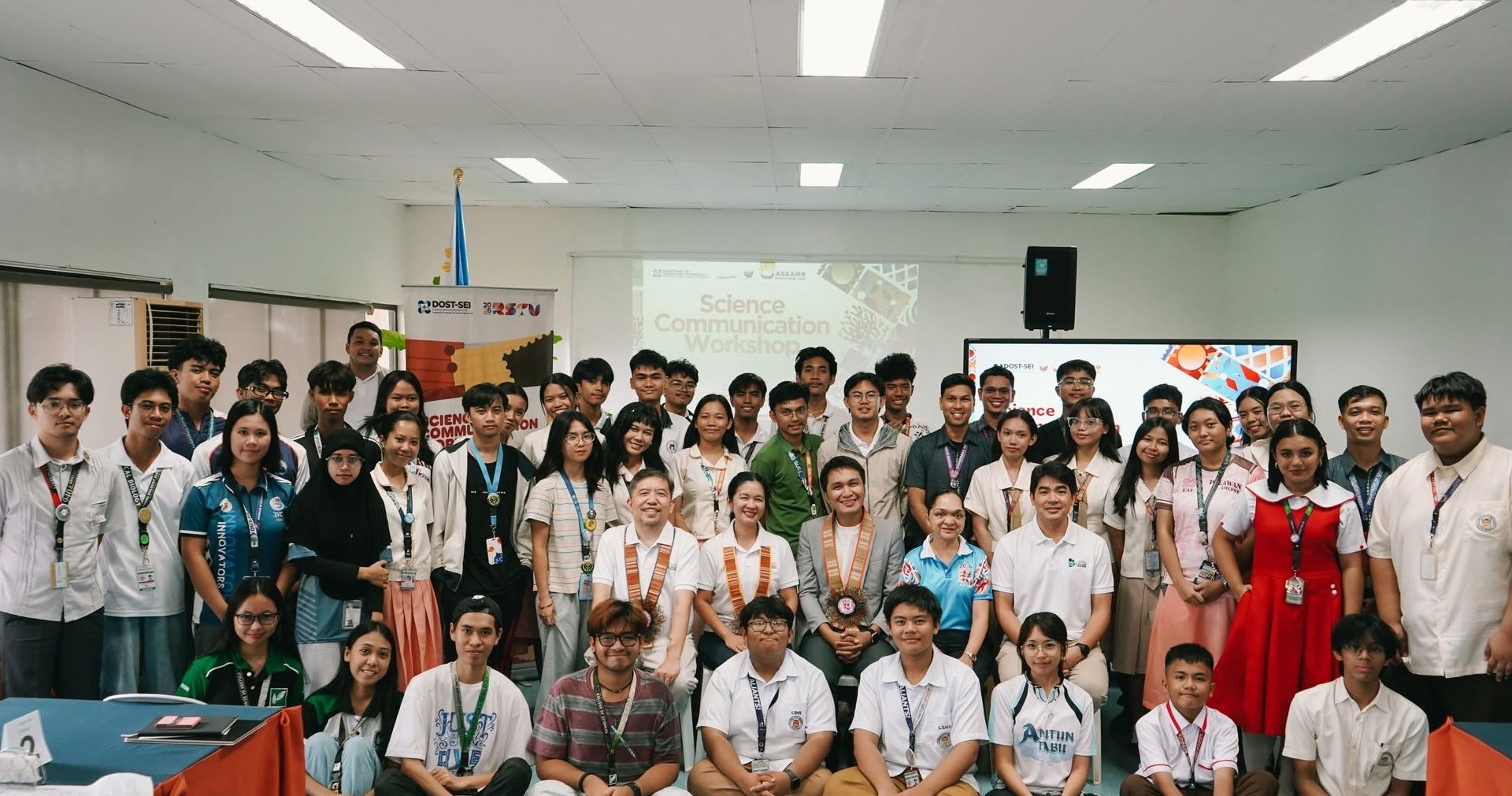





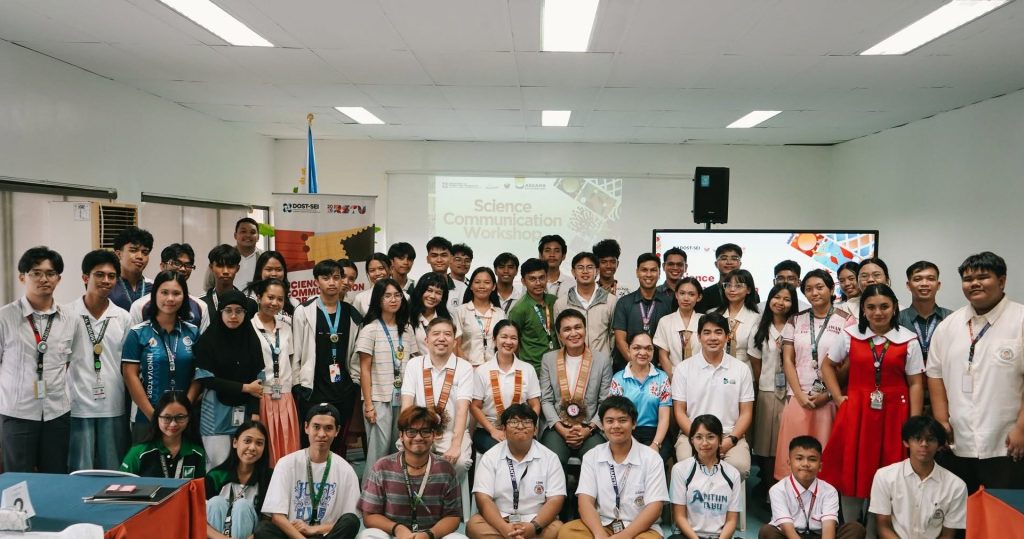
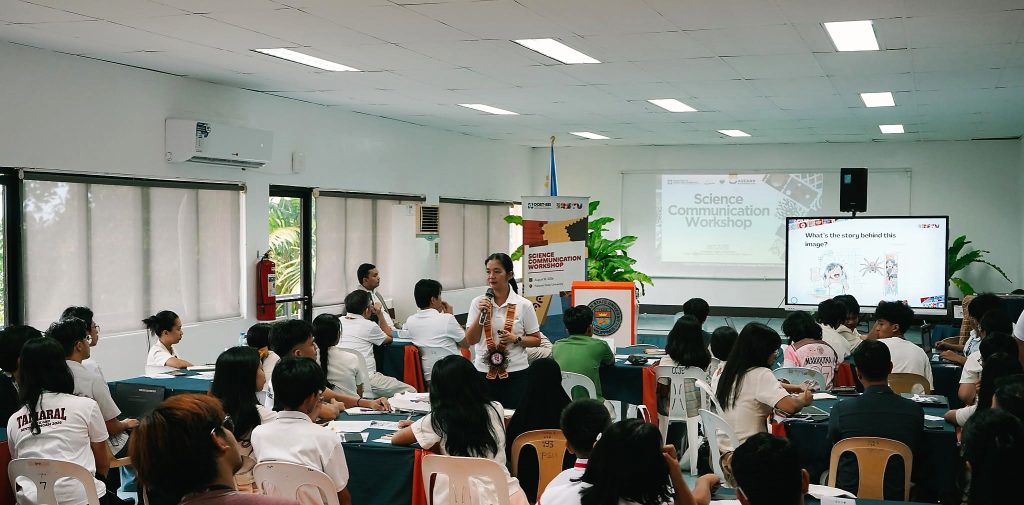
Students and teachers gathered at Palawan State University on August 18 for a Science Communication Workshop held as part of the DOST-MIMAROPA Regional Science, Technology, and Innovation Week. The workshop focused on helping young participants transform complex scientific research into engaging and accessible stories through visual media, filmmaking, and storytelling.
Palawan State University President Dr. Venzon L. Limpiada welcomed the participants and encouraged them to explore new ways of communicating science to wider audiences. The event highlighted the growing importance of effective science communication, particularly in making research and scientific concepts easier for the public to understand.
One of the workshop’s featured speakers was Dr. Aimee Lynn Barrion-Dupo, an entomologist, spider expert, and Professor 12 at the University of the Philippines Los Baños. She discussed human-centered science storytelling and explained the difference between simply presenting academic data and creating science communication that connects with audiences. By adding relatable human perspectives, complex scientific topics can become more engaging and easier to understand.
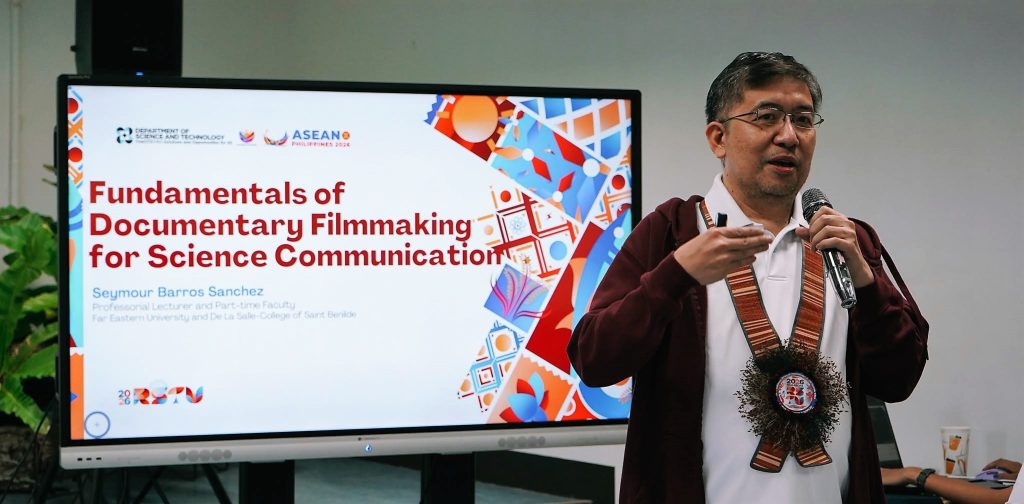
Advocacy filmmaker and communication lecturer Seymour Sanchez also shared practical filmmaking techniques for presenting scientific topics to broader audiences. His session explored documentary filmmaking, cinematic styles, and narrative structures that aspiring science filmmakers can use to effectively communicate their chosen messages.
Both Barrion-Dupo and Sanchez are members of the 10th Indie-Siyensya Board of Judges. Their participation also provided participants with insights into the standards and creative possibilities of science filmmaking.
The workshop also featured Juan Antonio Tuazon, Supervising Science Research Specialist of the DOST-Science Education Institute, who presented details about the Indie-Siyensya Film Festival. Recognized as the Philippines’ premier science filmmaking competition, the festival promotes science appreciation among young people and filmmakers through visual storytelling.
Through the Science Communication Workshop, students and teachers gained practical knowledge on filmmaking, storytelling, and communicating scientific ideas. The initiative further encouraged the next generation to use creative media to make science more understandable, relevant, and accessible to Filipino audiences.